
Community Safety
Sexually Violent Predator Notifications
Community notifications for sexually violent predators residing in Jefferson County, pursuant to CRS 16-13-901.
Community Notification
This notification is released pursuant to Colorado Revised Statutes 16-13-901 through 16-13-905, which authorize law enforcement agencies to complete a community notification process when a sex offender residing in the jurisdiction has been determined to be a sexually violent predator. The purpose of this notification is to enhance public safety and protection.
Current SVP Bulletins
SVP Bulletin — Sexually Violent Predator
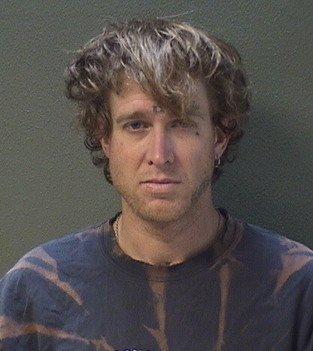
Ray Andrew Walters
Convictions
- 2016 — Contributing To The Delinquency Of Minor
- 2016 — Attempted Sexual Assault on a Child Position of Trust
SVP Bulletin — Sexually Violent Predator

Jerry Freyta
Convictions
- 1987 — Sexual Assault on a Child
- 1987 — Aggravated Incest
- 2007 — Attempted Sexual Assault on a Child
The individuals depicted in this notification have been convicted in Colorado as sex offenders who must register with law enforcement. They have been determined to present a high potential to re-offend and are therefore subject to community notification regarding their living in your community.
The Jefferson County Sheriff's Office has no legal authority to prohibit sex offenders from living in our community. Sex offenders have always lived in our communities, but they were not required to notify law enforcement until registration laws were implemented.
~19,471
Registered sex offenders in Colorado
~310
In unincorporated Jefferson County
~594
SVPs on CBI website (nearly half incarcerated)
What is a Sexually Violent Predator?
SVP Definition
A Sexually Violent Predator (SVP) is defined under Colorado Revised Statutes 18-3-414.5. According to research, the SVP assessment indicates that designated SVPs are more likely to commit a new sex or violent crime post-release. SVPs are subject to community notification under CRS 16-13-901 and must register with law enforcement quarterly for life.
How SVP is Determined
SVP designation is determined in two ways:
- 1.Assessment and Court Finding: A risk assessment is conducted by probation/DOC staff and an approved evaluator. If criteria are met, the court or parole board makes a finding designating the offender as an SVP.
- 2.Interstate Equivalency: An offender moves to Colorado from another jurisdiction where they were ranked as the highest risk/registration level, and the Colorado Bureau of Investigation (CBI) makes the equivalency finding.
Assessment Criteria
An offender must meet all of the following criteria before undergoing the SVP assessment:
- Must be age 18 or older at the time of the offense (or tried as an adult)
- Offense committed on or after July 1, 1997
- Conviction on or after July 1, 1999
- Qualifying crime: Sexual Assault, Unlawful Sexual Contact, Sexual Assault on a Child, or Sexual Assault on a Child in a Position of Trust (including attempts, solicitations, and conspiracies)
- Victim was a stranger or a person with whom the offender established a relationship primarily for the purpose of sexual victimization
Community Safety
Important Reminder
SVPs do not represent all dangerous sex offenders, and the community notification process is not a complete deterrent to sexual assault. A stable offender equals increased community safety. Any citizen who uses this information to harass, threaten, or intimidate will be subject to criminal prosecution.
Talking to Your Children
- Avoid scary details. Use language that is honest and age-appropriate.
- Teach your children not to visit the offender's home or yard, but also not to harass them.
- Teach your children to tell a safe adult if anyone acts inappropriately towards them — including being overly friendly, threatening, or not respecting their boundaries.
Child Abuse Prevention
- Pay attention to your child's thoughts and feelings
- Role play with your child: act out scenarios of dangerous situations and teach them how to respond
- Avoid high-risk situations and be observant of your surroundings
- Teach correct names for body parts
- Teach children that adults are not always right
- Teach the importance of honesty and the danger of keeping secrets
Prevention: Behaviors to Watch For
We all have personal boundaries that define our "personal space." Solid social rules strengthen these boundaries. Behaviors that routinely disrespect or ignore boundaries make children vulnerable to abuse. Watch for adults who exhibit the following behaviors:
Personal Space
- Makes others uncomfortable by ignoring social, emotional, or physical boundaries or limits
- Refuses to let a child set any of his or her own limits; uses teasing or belittling language to keep a child from setting a limit
- Insists on hugging, touching, kissing, tickling, wrestling with, or holding a child even when the child does not want this contact
- Frequently walks in on children or teens in the bathroom
Relationships with Children
- Turns to a child for emotional or physical comfort by sharing personal or private information normally shared with adults
- Has secret interactions with teens or children (e.g., games, sharing drugs, alcohol, or sexual material) or spends excessive time emailing, text messaging, or calling children or youth
- Insists on or manages to spend uninterrupted time alone with a child
- Seems "too good to be true" — frequently babysits different children for free; takes children on special outings alone; buys children gifts or gives them money for no apparent reason
- Allows children or teens to consistently get away with inappropriate behaviors
Sexual Conversation or Behavior
- Frequently points out sexual images or tells dirty or suggestive jokes with children present
- Exposes a child to adult sexual interactions or images without apparent concern
- Is overly interested in the sexuality of a particular child or teen (e.g., talks repeatedly about the child's developing body or interferes with normal teen dating)
Source: Stop It Now! (www.StopItNow.org) — Together We Can Prevent the Sexual Abuse of Children
Create a Family Safety Plan
The guidelines below can help you create an environment to better protect your family from sexual abuse. By understanding what puts children at risk of sexual abuse, we can take actions to counter those risks.
Educate Everyone in the Family
- Make sure each family member knows what healthy sexual development in children is, and what sexual behaviors might be of concern.
- Learn to recognize warning signs that a child may have been sexually abused.
- Teach children the proper names for body parts and what to do if someone tries to touch them in a sexual way.
- Make sure young children know that no one has the right to touch their private parts (unless for medical reasons).
Start Talking About Sexual Abuse
- Adults need to take the lead by opening discussion about what is healthy sexual behavior and what is abusive.
- Talk more than once with all family members — children, teenagers, and adults — about appropriate and inappropriate sexualized behaviors.
- Let everyone know they can ask questions during the discussion, or talk further in private at a later time.
Set Clear Family Boundaries
- Set clear family guidelines for personal privacy and behavior. Discuss them with all members and model respecting these guidelines.
- Discuss these guidelines with any other adults who spend time around or supervise the children.
- Let children know that if they are not comfortable being around a particular adult, you will let that person know.
- As a child matures, boundaries may need to change (e.g., knock on the door before entering the room of an adolescent).
Get Safe Adults Involved
- Identify one or more support person for each family member to talk to if there is a concern. Be sure no one in your family is isolated.
- Research shows that having someone to talk with and confide in plays a key role in how well a child will bounce back from stressful events.
- If someone is "too good to be true," ask more questions. Even a close friend or relative may not be a safe person to trust with your child.
Know Your Local Resources
- Learn about the agencies in your area. Know who to contact to make a report if you know or suspect that a child has been sexually abused.
- Make a list of resources you can call for advice, information, and help — and include the phone numbers. Start with the resources listed below.
Care Enough to Reach Out
- If you are concerned about the sexualized behaviors in a parent, cousin, sibling, or other family member, care enough to talk with them.
- If you are concerned about your own thoughts and feelings towards children, help is available at www.StopItNow.org/gethelp.
- Make sure everyone knows that they can talk with you about any inappropriate behavior that may already have occurred — that you love them and will work to get them help.
Source: Stop It Now! (www.StopItNow.org) — Original content by Joan Tabachnick
Resources
Colorado Sex Offender Registry (CBI)
Search the public database of registered sex offenders
Colorado Sex Offender Management Board
Standards and guidelines for sex offender management
Dru Sjodin National Sex Offender Public Website
U.S. Department of Justice national registry
RAINN — Rape, Abuse & Incest National Network
The nation's largest anti-sexual violence organization
National Center for Missing & Exploited Children
Resources for child safety and missing children
Stop It Now!
Prevention tools and resources — Helpline: 1-888-PREVENT
Phone Resources
National Sexual Assault Hotline
1-800-656-HOPERape Assistance Program
(303) 322-7273Report Criminal Activity
This information is current but may change with the passage of time. For more information on sexual offenses, sexually violent predators, and personal safety tips, visit www.jeffcosheriffco.gov.